
Contact us
Speak to a Solution Specialist today.
Information provided within this form will be handled in accordance with our privacy statement.
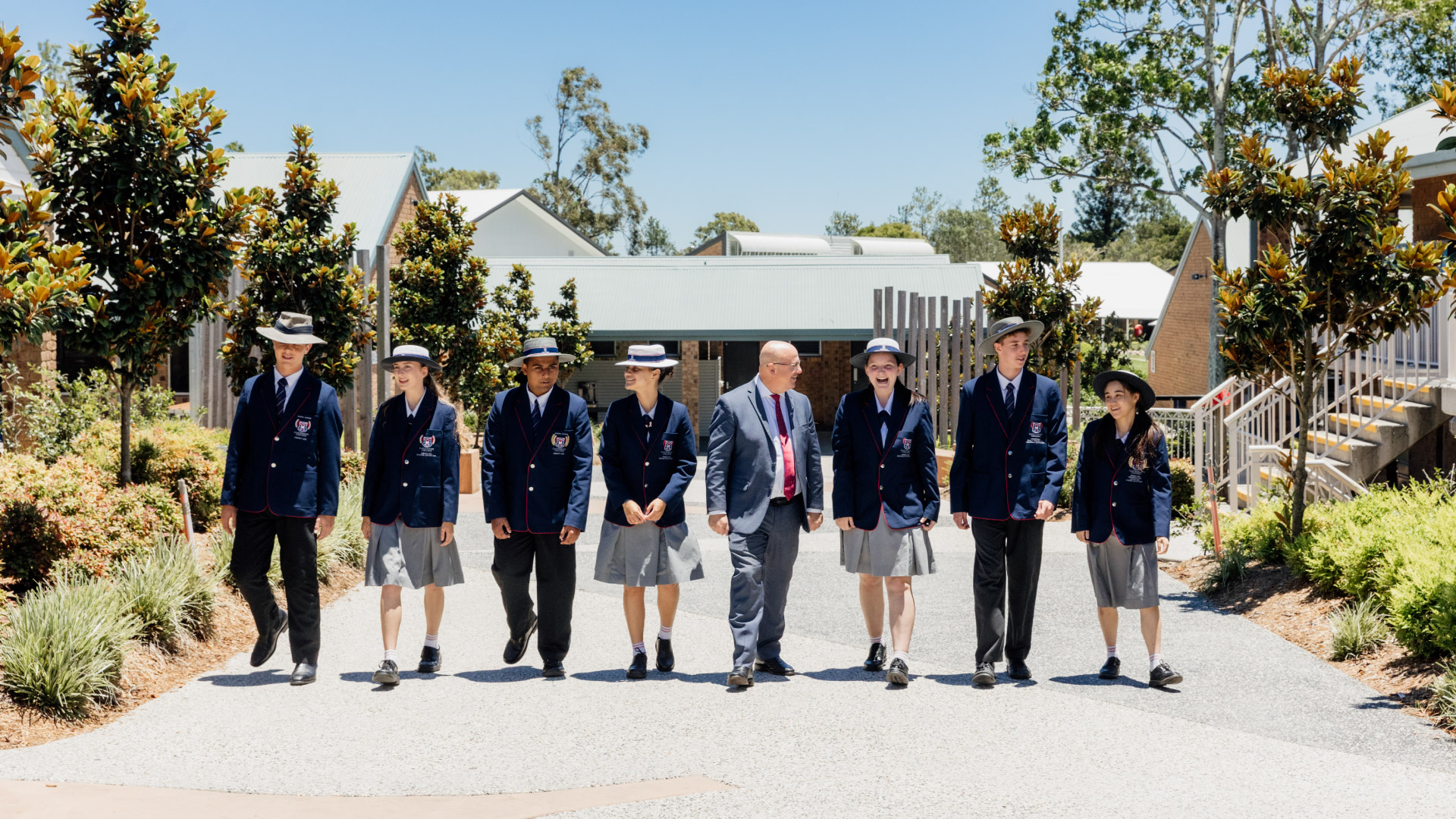
Australian Catholic University shapes the future of learning with Microsoft Azure.
What impressed me from the start was the embodiment of partnering that was demonstrated by Data#3. Their care and attention to our running environment was exemplary. I’ve been in the industry for 30+ years and I’m very pleased with the level of control and knowledge transfer, as well as the camaraderie.
Adrian Yarrow - National Manager Digital Platform Services - Information Technology, Australian Catholic University.
The Australian Catholic University relied on ageing, on-premises infrastructure and sought to modernise operations to support future success.
The university evaluated potential options and chose to partner with Data#3 because of their long-standing partnership with Microsoft and their proven track record on a similar project with another university.
The Australian Catholic University (ACU) opened in 1991 following amalgamation of four catholic tertiary institutions in Eastern Australia. The university quickly established itself as a leader that prioritises student experience and outcomes, with a 95% graduate employment rate. The university recently ranked 1st in Australia for research quality.
As core IT infrastructure approached end of support, the university determined that transitioning to the cloud would provide a foundation for continued leadership.
Technology is vital in higher education, from supporting students to enabling efficient operations and advanced teaching. As ACU’s ageing on-premises infrastructure neared its end of support, CIO Russell Parker prioritised finding the best cloud solution.
“Compute and data services are the foundation of the tech stack, so they are core to enabling our broader technology and digital aspirations and underpin our ability to be responsive to the dynamic needs of the institution. What is most important is that by creating the right foundation, it positions us not only to capitalise on the benefits of cloud infrastructure in an operational context but also enables us to support the many initiatives that make up our strategic portfolio.”
While there are always a rich mix of opportunities and challenges in such diverse environments, Parker said that “for us to realise our target future state”, it was essential to get the foundations right.
“It was a conscious decision to start with that. As we looked at the tech stack, and we looked to modernise the technology landscape, we took a bottom-up approach. We took the view that we should be focused on infrastructure, followed very closely by cyber security and data maturity, before worrying about the application, integration, orchestration and experience layers.
At the time, universities were still emerging from the challenges and financial impact of a global pandemic, and costs were carefully controlled. Parker acknowledged the forward-thinking wisdom of the university’s leadership in supporting an ambitious modernisation project in this commercial context.
“Supporting this initiative in that context showed confidence and took courage. It also demonstrated their understanding of what it would take to modernise our technology environment,” explained Parker. “We couldn’t have maintained the aspirations we have on other fronts, in terms of apps, digital modernisation and student experience, without that foundation.”
After considering their needs carefully, a tender was issued to identify a suitable partner to work with on this critical first stage of the university’s digital transformation.
“We partnered with Data#3, a long-standing and trusted Microsoft Solutions Partner, to deliver this project. Their deep expertise in VMware and Microsoft Azure, combined with a proven track record in higher education, made them the ideal partner to lead the migration.
“Microsoft’s role was equally critical, not just as the cloud platform provider, but as a strategic collaborator. Their engineering support, architectural guidance, and commitment to co-designing solutions with us ensured we could move with confidence and clarity,” said Parker.
ACU worked with Data#3 and Microsoft specialists to fine-tune plans for a shift to Azure hosted services, with Data#3 performing a structured and phased build of the Azure landing zone and migrating core infrastructure to the cloud. Parker said the importance of this transition should not be underestimated.
“As Chief Information and Digital Officer at ACU, I’m proud to share the successful migration of our core IT infrastructure from two on-premises data centres, located in Melbourne and Sydney, to Azure. This fundamental shift in our infrastructure profoundly and positively changes the way we enable agility, resilience, and innovation across the university.”
Along with VM migration using Azure VMware Services (AVS) and application gateway development, Data#3 drew on its depth of security and business continuity expertise, deploying Palo Alto Firewall Services and Commvault Cloud Backup to ensure the solution was robust. Throughout the process, risk management was key.
“The migration followed a structured ‘lift and shift’ approach, moving VMware-based workloads into Azure in carefully sequenced waves. This allowed us to group systems by technical dependencies, minimise risk, and validate each step through rigorous testing. We retained rollback options throughout, ensuring continuity of service and operational safety.”
The six-month phased project meant that Data#3, Microsoft and ACU worked closely together, building a relationship that Parker said was notable for its collaboration and mutual respect. While the ACU team was generous sharing knowledge of their own environment, they were also quick to embrace the opportunity to work with a team with deep experience of performing cloud transitions.
“Data#3 embedded into our team with a real partnership approach and strong project governance. They built the environment and led the migration process. The expertise was coming from the Data#3 guys of something our team had not been exposed. We had a once-in-a-career chance to experience the transition to cloud.”
The staged approach allowed ACU to manage the transition to Azure alongside their day-to-day activities. From start to finish, the university focussed on achieving results without causing disruption to users. The outcome, said Parker, allowed his team to provide a more responsive service; free of the burden of managing data centres, they could focus on adding greater value.
“The benefits have been substantial. We’ve significantly reduced the operational burden of managing physical infrastructure, allowing our teams to focus on higher-value, innovation-led work. More importantly, we’ve unlocked greater agility in how we provision compute and data services. What once took weeks can now be achieved in hours, whether it’s spinning up new environments, scaling workloads, or integrating advanced services like analytics, AI, or automation.”
Data#3 embedded into our team with a real partnership approach and strong project governance. They built the environment and led the migration process. The expertise was coming from the Data#3 guys of something our team had not been exposed. We had a once-in-a-career chance to experience the transition to cloud.
Russell Parker - Chief Information Officer, Australian Catholic University.
By moving away from ageing infrastructure, ACU has acted to prevent rising risk. The Australian Signals Directorate (ASD) says that legacy IT “presents significant and enduring risks to the cyber security posture” of organisations, and hidden costs such as maintenance, support, and downtime just add to the burden. This, along with avoiding lost opportunities, was top of mind for the ACU team when embarking on the transformational project.
“It was the view of the leadership team that we needed to do this early so that we could turn our attention to other things. “
Those “other things” in the university context are many and varied, but all contribute in some way to keeping ACU at the forefront of tertiary education. The university is justifiably proud of its growing reputation among students, researchers and academics alike. Technology is very much a differentiator in this fiercely competitive sector, and although groundbreaking apps gather the most headlines, for National Manager Digital Platform Services – Information Technology, Australian Catholic University. Adrian Yarrow, it was clear that these are reliant on the right underlying foundation.
“Much in the same way with cyber security, you can’t rest on your laurels with investments in infrastructure. It is not set and forget, we need to remain diligent, need to remain conscious of ongoing investment, and to continue to do so moving forward. We must demonstrate that the move to Azure has indeed allowed us to realise the proposed benefits. We must show demonstrable value.”
In moving from a capital expenditure (capex) to an operational expenditure (opex) model, Yarrow was acutely aware that the project would not only be judged on its technical fit but also its financial viability. Cloud overspend had proven problematic for plenty of organisations, so paying close attention to operational consumption of resources, the financial implications, and ensuring effective governance was critical.
“This profoundly shifts our operating model and the way we think of these resources. We had some early reminders about the importance of staying on top of things diligently when it comes to FINOPS. Those early experiences and reminders were helpful in terms of our posture. I think they created a heightened sense, making sure we stayed on track,” stated Yarrow.
Part of that heightened sense came in the form of increased visibility, and the Data#3 team helped ACU to become adept with Azure tools that give technology consumption insights that just weren’t possible with on-premises infrastructure.
“We were effectively blind to utilisation in terms of infrastructure layers- it was not possible to fully identify the capacity used in the various systems we ran in terms of how to attribute that across the organisation. We now can be more strategic about the resources we are managing.
“Having that insight creates a greater awareness and understanding of what is driving cost and consumption, and the need for resources. What we might have done before, essentially, is over provision for infrastructure needs but not really known where or why that was needed. Now, we know what is driving demand, so we can be more effective in managing these resources and tell a more complete story.”
Although the foundation had been put in place to support ACU as it reaches into the future, Parker is proud that users were oblivious to the monumental shift from ageing infrastructure to a modern, cloud-based environment.
“The approach that Data#3 and Microsoft put on the table was non-invasive, with no extended outages as we migrated our existing environment to Azure, it happened in a few windows of time out of hours. I asked myself, ‘did anyone notice it happening?’ If not, great job!”
While the project itself was almost invisible to users, the future it has enabled is anything but. Recognising the capacity for technology to differentiate, Parker said that ACU can now be more responsive to opportunities.
“We can respond to emerging needs, especially in a university that is hungry for digital adoption. Traditional procurement processes took time, and now we are able to bring demands to bear very quickly, and to be very accurate with our forecasting, which has an impact to the university’s budget position.”
We can respond to emerging needs, especially in a university that is hungry for digital adoption. Traditional procurement processes took time, and now we are able to bring demands to bear very quickly, and to be very accurate with our forecasting, which has an impact to the university’s budget position.
Adrian Yarrow - National Manager Digital Platform Services – Information Technology, Australian Catholic University.
From the project’s conception, the university formed a clear idea of the outcome it desired, helping to provide a consistent focus. The support of a leadership team with the “courage, foresight, and conviction” to invest in technology transformation demonstrated to Parker a drive to excellence that even a global pandemic could not derail.
It is perhaps unsurprising that a university known for valuing expertise in its own offerings also prioritised depth of knowledge when choosing a technology partner and sought the opportunity to acquire skills along the way.
“Data#3 and Microsoft followed a best practice approach, learning from each engagement and applying that to the next customer, which is an important element of risk management. They have a playbook built on that experience. They have really solid product expertise, with flexibility because each organisation has its own environment,” explained Parker.
“We employed a pairing process so that our team could acquire knowledge transfer as it was happening, and this allowed us to continue our momentum.”
While ACU continues to make headlines for the right reasons, Parker was happy that the move to Azure passed unnoticed by the university community beyond the infrastructure team and leadership.
“The planning, design and execution enabled us to achieve this without disruption to the organisation, and it is often described as the best project that nobody knew about. People didn’t know it was happening; they didn’t have any sense of the complexity and the challenges involved, and one could argue nor should they. It implied a lot of confidence in the team and the approach, the fact that we were able to do what we did,” said Parker.
Looking back, the highlight for Yarrow was the teamwork displayed by the ACU, Data#3 and Microsoft technology specialists as they worked towards the project’s completion.
“What impressed me from the start was the collaboration and care that was demonstrated by Data#3: their care and attention to the ACU running environment was exemplary. I’ve been in the industry for 30+ years and I’m very pleased with the level of control and knowledge transfer, as well as the camaraderie,” concluded Yarrow.
With over 30 years of experience in the education sector, our team is focused on helping our schools to plan, deploy and manage a digital environment that supports learning and broader business objectives. Leveraging a partnership approach, we will align your ICT strategy with your goals to drive improved outcomes, while reducing cost and risk.
Contact our team of education specialists to explore
Microsoft Surface devices powered by Snapdragon® to boost learning and productivity.
IT teams are under pressure to streamline operations, improve collaboration and keep their data secure,...

For most Australian organisations, cloud remains a core part of their IT strategy. The value of public...

Three overlooked apps every organisation should use When you think of Adobe Creative Cloud, the...
Transitioning from legacy to modern cloud foundation for innovation.

February 4, 2026; Brisbane, Australia: Leading Australian technology services and solutions provider,...

Australian Catholic University shapes the future of learning with Microsoft Azure.

In September 2025, a 32GB DDR5 memory module cost about US$95. By December, that same module was selling...

As 2025 comes to an end, it is the perfect moment to reflect on the stories, trends and conversations...
December 15, 2025; Brisbane, Australia: Leading Australian technology services and solutions provider,...

I’ve just recently returned from Microsoft Ignite in San Francisco, Microsoft’s flagship...

December 8, 2025; Brisbane, Australia: Leading Australian technology services and solutions provider,...

82 per cent of cyberattacks are now AI-enabled. 14 per cent of organisations feel prepared for them. If...

December 05, 2025; Brisbane, Australia: Leading Australian technology services and solutions provider,...

Getting Microsoft Fabric into production is a milestone, but it’s not the finish line. Many...

The drive to become data-driven is universal, with many organisations making promising early progress....

If your analytics plan has been sitting in draft for the past 18 months, you’re not alone. Most...

In today’s rush to adopt AI, many organisations feel pressure to “get on the AI bandwagon”, whether...

The DevOps world is undergoing a fundamental transformation. We’re witnessing a shift from humans...

Building a smarter campus with Data#3 and Cisco.


Speak to a Solution Specialist today.
Information provided within this form will be handled in accordance with our privacy statement.